 Liveaboard and leisure boaters share their routines for protecting pipes, engines, and morale through the canal's coldest months.


Why Two Identical Formations Can Produce Opposite Games
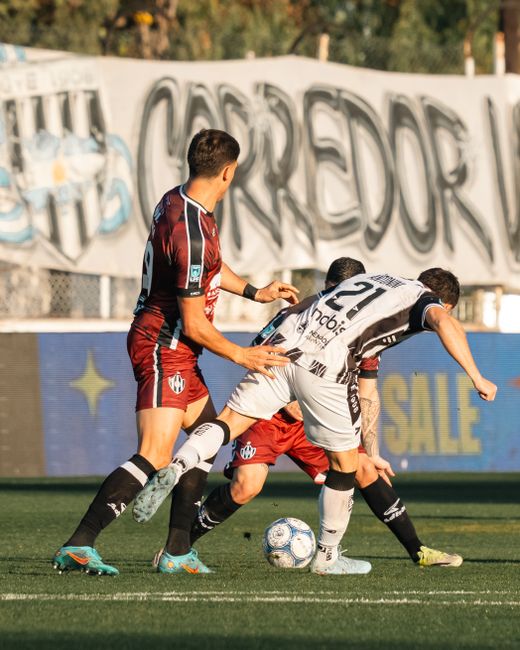
Put two teams on a tactics board with the same 4-3-3 and a neutral observer would expect a similar match. Then watch the actual ninety minutes and you may see one side suffocating the other with a high press while the other sits deep and counters. Same shape, completely different sport.
The formation is just a picture of where players stand when a phase of play resets. It says almost nothing about the distance between those players, how fast they intend to move the ball, or where the defensive line wants to live. Once you start reading those three variables, identical labels become about as informative as saying two cars are both "blue".
Spacing: The Shape Inside the Shape
A 4-3-3 can stretch across seventy metres or squeeze into thirty-five. Picture a possession-heavy side whose full-backs push near the touchline and whose front three hug the flanks. That team occupies the full width of the pitch, creating isolations for wingers but leaving enormous gaps between the lines if a pass goes astray. Now picture a pressing side in the same nominal 4-3-3 where the full-backs tuck into midfield, the wingers drift inside, and the centre-forward drops to link play. That team is compact and central, built for quick combinations and counter-pressing, but it offers almost no width in the final third.
Spacing has a second dimension too, and it is the one casual viewers miss: vertical distance between the defensive line and the forward line. A high line with an aggressive offside trap compresses the team into maybe twenty-five metres front to back. A low block with a sweeper keeper can stretch that to forty metres or more. Same eleven players, same formation label, and the amount of usable space in behind is completely different.
Coaches often describe this as the difference between "occupying the pitch" and "protecting the pitch". One setup invites the ball into wide areas and uses numerical superiority there. The other funnels everything central and dares you to break a wall. The formation diagram shows neither.
Tempo: The Rhythm Nobody Diagrams
Ask a manager what their team's identity is and you will usually hear a tempo answer before a shape answer. Some sides want to play 1.5 passes per second, attacking before the opposition can set. Others want to slow the game to a crawl, draw the press out, and then strike into the space it leaves.
Consider two teams in a 4-2-3-1. Team A's double pivot takes the ball from the goalkeeper and immediately plays vertical passes into the number ten. Their average possession sequence might last six or seven seconds. Team B's pivot circulates side to side, waiting for a full-back to be free, and their sequences routinely run twenty-plus seconds. Against a mid-block, Team A gets intercepted and punished. Against a high press, Team A slices through. Team B struggles against organised pressing but thrives against impatient opponents who leave gaps chasing the ball. For up-to-date information, visit xoilac.
Tempo also changes how a formation behaves without the ball. A team that plays fast in possession usually wants to win the ball back quickly because their attackers are already high and disconnected from the defence. A slow, patient team tends to drop into shape after losing the ball, because their structure is built for control rather than chaos.
Pressing Height: The Same Formation, Two Universes
Here is where the labels fall apart most dramatically. A 4-4-2 can be a ferocious pressing machine or a stubborn low block, and the two versions barely resemble each other.
- High-press 4-4-2: the front two split the centre-backs, wide midfielders jump onto full-backs, and the line squeezes to the halfway line. The aim is to force errors within twenty metres of the opponent's goal.
- Low-block 4-4-2: the front two stay central and screen the pivot, the midfield four forms two flat banks of four, and the back line sits on the edge of the box. The aim is to deny space in behind and force crosses into a crowded area.
The pressing trigger is different too. High-press sides jump when a centre-back takes a heavy touch or a full-back receives with their back to goal. Low-block sides wait for a pass into a marked midfielder and then swarm. Watch the first ten minutes of any match and you can usually tell which version you are seeing: count how many times the defensive line crosses the halfway line.
Why Coaches Choose the Same Label for Different Jobs
So why do so many teams end up with the same formation number? Because the label is a starting point, not an identity. Managers inherit squads and fit a shape to the players available. A team with two quick, hard-running strikers will use a 4-4-2 to press. A team with a slow, technical front pairing will use a 4-4-2 to sit deep and counter. Both are "4-4-2" and neither is wrong.
There is also a practical reason: formations are the language of team sheets. Broadcasters, pundits and analysts need a shorthand. That shorthand is useful for knowing who marks whom at set pieces, but it is dangerous if you treat it as a description of style. The moment you hear "they both play 4-3-3" and assume the game will be symmetric, you have stopped watching and started guessing.
What to Watch Instead of the Diagram
If you want to read a match properly, ignore the graphic and track these things in the first fifteen minutes:
- Width of the back four. Are the full-backs near the touchline or tucked inside the centre-backs?
- Height of the defensive line at rest. Where does it sit when the goalkeeper has the ball?
- First press trigger. Which pass or touch makes the front line jump?
- Ball speed in build-up. Count seconds between the goalkeeper's first pass and the first forward pass.
- Distance between the striker and the deepest midfielder. This tells you how much space the opposition can exploit between the lines.
You will quickly find that two teams listed identically can differ in every one of these measurements. One is a compact, vertical pressing side; the other is a wide, patient possession side. The match between them is not a mirror, it is a collision of two different sports played in the same stadium.
The Lesson for Coaches and Fans Alike
The formation is a map, not the terrain. It tells you the starting positions but nothing about the space, the speed, or the aggression that actually decide matches. When you are coaching, be precise about what you mean: if you tell your team to play 4-3-3, also tell them how wide, how high, and how fast. When you are watching, look past the graphic and watch the gaps.
Football's beauty is that eleven players can be arranged in the same pattern and produce two entirely different games. The next time someone says "both teams play the same system", smile and count the metres between the lines. That is where the truth lives.